What has a state?
Quantities and variables that describe the system.
 HelmLabsSign inRequest an invite Talk to Helm
Our research model of brain state and dynamics. Explore different observations and scales through task-specific views of a shared computational substrate.
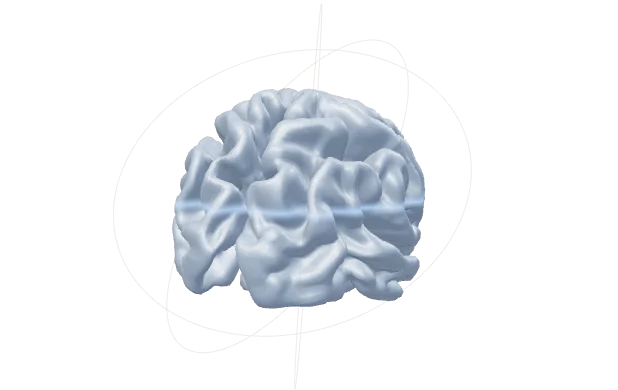
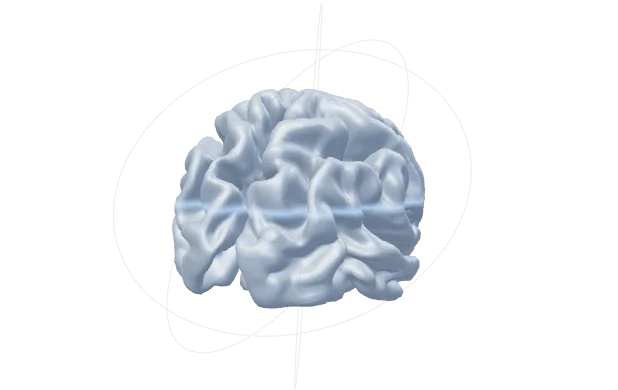
Brain dynamics, neural observation models, and brain–body interaction.
Public code, technical documentation, notebooks, and checkpoint releases.
The framework describes shared structure, then instantiates a task-specific model at the required regions, resolution, and timescale.
Quantities and variables that describe the system.
The structures that give those variables a location.
The relationships through which states influence one another.
The dynamics that evolve the state over time.
“Implicit” refers to deriving models from a shared declaration as needed. It does not mean unconscious cognition or establish a System 1 performance claim. Explore the architecture ↗
Investigate how modeled states relate to EEG and other measurements, with task-specific forward models and evaluation.
Study relationships between sensory input and neural observations, using explicit baselines and ablations to test what the dynamics contribute.
Investigate interfaces between neural dynamics, bodily state, and movement in simulation. Physical transfer requires separate experiments.
The repository reports visual retrieval on the designated 200-concept THINGS-EEG2 test set. The architecture’s contribution varies by task; this result does not establish general superiority.
| Model | Result |
|---|---|
| Implicit brain model | 63.5% |
| Dynamics-free encoder | 66.5% |
Retrieval is not reconstruction. The repository withdraws the directional superiority claim. Read the experiment notes ↗
Program notes also describe tasks where added dynamics do not improve the relevant baseline. Treat each result as version- and task-specific. Read the program status ↗
Explore how brain and body dynamics might inform future behavioral models. The reviewed experiments do not establish prediction of buying decisions or population behavior.
Investigate bodily feedback and embodied dynamics within simulation, alongside dedicated robot environments and control systems.
Study potential connections with specialized judgment models. Brain-model research and operational System 1 models have different evaluation requirements.
Research artifacts are available through the project repository and checkpoint release. The public model card lists a non-commercial research license; review the applicable terms and data restrictions for any intended use.
For researchers and teams exploring neural dynamics, embodied cognition, and shared representations.
Discuss a research collaboration