
HELM / BEHAVIORAL SIMULATIONHELM PRODUCTS

Understand people.
Rehearse what happens next.

Simulate customers, employees, and populations with persistent goals, preferences, knowledge, and memory. Rehearse business decisions and build behavioral environments that teach and test AI judgment.

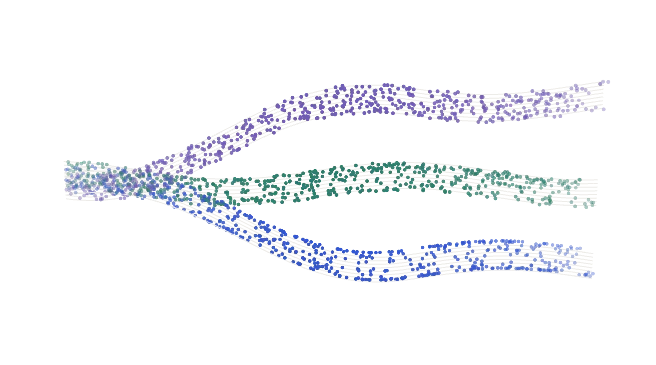
Helm / Behavioral simulationConceptual visualization

Behavioral digital twins / Research & decisions

People, populations,
and possible futures.

Research for business decisions.
Environments for AI development.

Ask questions, introduce a new experience, or change the conditions of a market. Helm’s behavioral digital twins model how people respond—and how those responses differ across a population.

Product & pricing research

Which offer fits the people it is for?

Compare concepts, features, packaging, price points, and purchase trade-offs. Examine adoption, willingness to pay, switching, and the reasons different audiences choose.

Product & pricing use case

Campaigns & brand

How will a message land?

Test positioning, creative, claims, and channels with the intended audience. Study comprehension, relevance, trust, and likely response before committing to a campaign.

Discuss a campaign study

Audiences & segmentation

What explains the differences?

Build populations around needs, habits, constraints, and preferences. Compare customers, prospects, and underserved groups across the same alternatives.

Population data & provenance

Employees & communications

What will people understand—and do?

Explore how employees, customers, partners, and communities interpret an announcement or operational change. Compare trust, adoption, confusion, and follow-up needs.

Company context & knowledge

Markets & strategic scenarios

What happens after the first response?

Rehearse market entry, competitive moves, and disruption. Model stakeholder interactions and second-order effects, then compare which strategies hold under different assumptions.

Scenario planning use case

Human–AI interaction

Does the system understand the person?

Simulate customer journeys, preference discovery, memory, corrections, and recovery. Use the same human context to train and evaluate software agents and embodied systems.

Human behavior in Physical AI

From a question to a decision.

Define an audience and its evidence. Compare alternatives through simulated interviews, surveys, choice tasks, and interactive scenarios. Inspect cohort findings, behavioral traces, assumptions, and uncertainty alongside the human evidence needed to validate the result.

FROM EVIDENCE TO AN EXPERIMENT

Turn the decision into an experiment.

The Helm workflow connects decisions with evidence you can inspect.

01

Define the people and the decision.

Define the target population, the decision under review, and the outcomes to compare. Specify segments, competing alternatives, and the assumptions each scenario tests.

02

Ground the context.

Ground simulated people in consented interviews, survey evidence, permitted behavioral observations, and company data. Preserve goals, knowledge, memory, constraints, and source permissions.

03

Let the interaction unfold.

Run questions, stimuli, choice tasks, and interactive worlds. Vary a product, message, policy, or agent behavior; inspect both individual responses and interactions between people.

04

Compare and validate.

Compare response distributions and behavioral outcomes by cohort. Use held-out human observations, document uncertainty, and refresh populations when evidence or real-world behavior changes.

WHAT THE SAME ENGINE CAN DO

For research teams, operators, and AI developers.

01 / AI LABS

Train for the human context.

Study preference discovery, memory, and adaptation. Package tasks, world state, and outcome checks into versioned evaluation environments.

02 / ENTERPRISES

Study a business decision.

Compare products, pricing, campaigns, communications, and strategic choices. Inspect differences between audiences and plan the real-world checks that support the decision.

03 / COMPANY INTELLIGENCE

Build a reusable population.

Connect permitted customer evidence and company context across studies. Learn which assumptions hold as real outcomes arrive.

THE STANDARD IS HUMAN EVIDENCE

Compare behavior with observed outcomes.

01 / CONTEXT

Does it stay true to the person?

Check memory, knowledge boundaries, and relevant preferences without giving the simulated person hidden answers.

02 / BEHAVIOR

Does it react to the experience?

Compare clarification, frustration, acceptance, correction, and abandonment under helpful and degraded conditions.

03 / TRANSFER

Does the finding survive reality?

Evaluate against independent people and situations. Separate persona consistency from population representativeness.

THE PERSON CHANGES THE RIGHT ANSWER02 / INSIDE A BEHAVIORAL WORLD

See how the person changes the task.

Explore three customer journeys. Change the agent’s behavior and see how the interaction—and the outcome—changes.

HELM / HUMAN ENVIRONMENTS INTERACTIVE CONCEPT
THE STARTING REQUEST

“Help me find headphones
for my trip.”

The same request can lead to a completed purchase—or a product that misses the moment it was needed.

COMPARE TWO AGENT BEHAVIORS
THE INTERACTIONEXAMPLE / READY
  1. Agent recommends a $79 bestseller.
  2. Ari discovers it arrives after departure.
  3. “That won’t work. I’ll look elsewhere.”
OUTCOME CHECK / TASK + PERSON + WORLD
DimensionWhat mattersObserved outcome
BudgetWithin $120$79 option PASS
TimingBefore ThursdayFriday delivery FAIL
Customer goalHeadphones for the tripCustomer leaves FAIL
A relevant product. An unmet need.

The recommendation fits the budget, but the agent never discovers the constraint that determines the decision.

HOLD THE CONTEXT FIXED. CHANGE THE EXPERIENCE. OBSERVE THE RESPONSE.ABOUT THIS PREVIEW ↗

Behavioral environments across the portfolio

People, populations,
and consequences.

Connect consumer and enterprise simulations, model and harness evaluation, agent learning, and physical interactions with domain models and real-world evidence.

Vertical foundation models Data & custody

Helm Labs / Browser settings

Cookie preferences

There are no analytics or advertising cookies on this site. Saving appearance settings is optional.

Your storage choice is kept so we can respect it. Appearance settings stay in this browser and are not sent by this website to Helm.

About browser storage